HealoDerm × Creator Drops
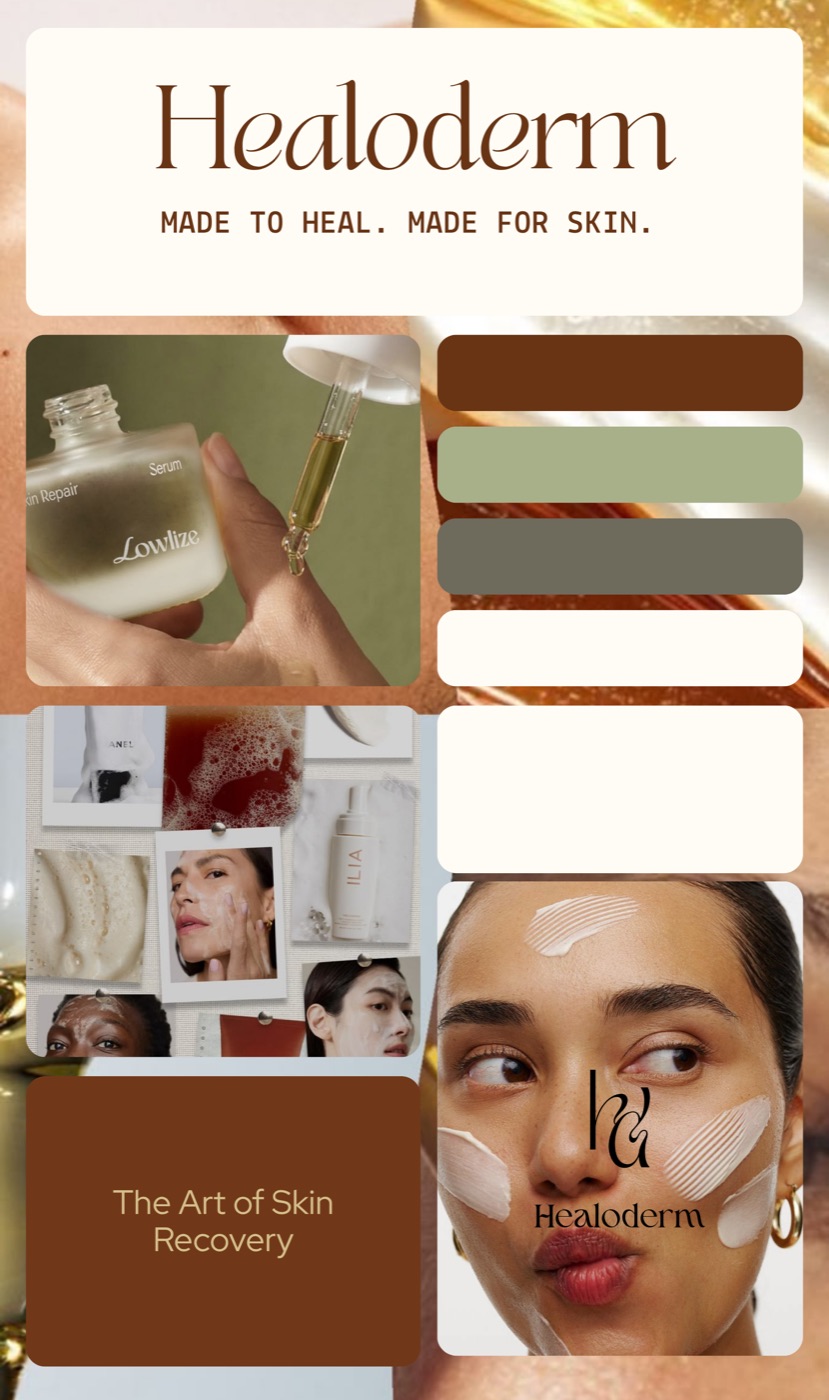
“Made to heal. Made for skin.” — a tagline I proposed, not HealoDerm’s current one
A creator program for a skincare brand, built so that a fifteen-second video ends in a checkout, not just a view count. Gifting and affiliate links run through one Shopify Collabs pipeline, with commission that starts at 20% and only rises after verified orders. No flat fees, no cash risk before a creator proves they can sell.
Part oneTHE ROLEtap the arrow to openHealoDermIMPRESSIONS↓ORDERS09/2026
Turn creator content into checkout activity.
HealoDerm had reach and no formal terms around it. Gifting happened, but nothing obligated a creator to post, codes weren’t guaranteed to be unique, and there was no ceiling on cash risk if a collaboration went nowhere.
The plan is commission-only: gifted product, a unique code and link through Shopify Collabs, and commission that starts at 20% and rises only after verified orders, never the reverse.
- ConstraintCommission-only by design, no flat fees, so cash risk stays at zero until a creator actually sells.
- ConstraintMain cash cost is shipping. Product is seeded from inventory and tracked internally as cost of seeding.
- ConstraintEvery full-size parcel ships tracked, matching HealoDerm’s own shipping policy of tracking after shipment.
- ConstraintNo paid media budget in the pilot window, everything above runs on organic reach and gifting alone.
One ladder, priced like a receipt. Everyone starts at 20%.
Every creator sees exactly what moves them up. Movement is based on confirmed orders, not follower count, and never starts above 20% no matter how big the audience. Every tier also carries the same 10% audience discount code, that part doesn’t change, only the creator’s commission does.
All newly approved creators
5 confirmed orders OR 3 posts on time
15 confirmed orders in a rolling 60 days
30+ confirmed orders in 90 days, or a strong bundle campaign
Short, time-limited campaigns only
Margin rule: never start a creator at 30–40%. Start everyone at 20% and let the higher tiers be earned.
Four weeks from playbook to first review.
Scoped to 80 hours total, roughly 20 a week, one person running this alongside everything else. That budget is why each week has one clear job instead of five running in parallel.
Install Shopify Collabs, build the application page, define the five tiers, and prepare the creator brief, tracker, DM/email templates, and one shipping SOP.
Source 50 creators. Send the first DM wave, move positive replies to email, approve the first group, generate codes and links.
Ship 8 to 10 creators, tracked. Track delivery, send the reminder sequence, log early content and traffic.
Review who posted, who sold, and who communicated well. Upgrade top creators to the next tier. Close weak partners. Start round two.
The four cards are targets, not results, what the plan is built to hit, not numbers HealoDerm has posted yet. The 80 hours is real, and it’s why the plan is four sequential jobs instead of everything running at once.
Discovery, recall, purchase — then back again.
A creator posts an honest routine video with the product on camera, disclosed as gifted or affiliate, per the agreement.
Days later, the viewer needs something simpler than a product name to act on. That’s the gap the packaging idea in Part Two is aimed at, not something solved yet.
Through the creator’s Collabs link or their code at checkout. Either way, the order carries the creator’s identifier, so it counts toward their tier.
Reliable creators earn more product, earlier access, and a higher tier. Unreliable ones lose future gifting eligibility.
58 reached, 8 agreed, 6 claimed.
The real funnel from the first outreach wave. Drop-off between agreeing to connect and actually claiming a product is normal, not every interested creator follows through.
“As part of the collaboration, we would ask you to personally try the products and create one original Reel, TikTok, or post featuring your experience with the product, ideally within 14 days after receiving your package.”
This is the written-agreement step Shopify’s own guidance calls for, sent and accepted before any product ships.
Illustrative numbers, pending sign-off.
HealoDerm’s real Shopify Analytics exist, in the same shape shown below, but publishing another business’s actual revenue and traffic figures under their name isn’t mine to decide alone. The numbers here are placeholders until the brand explicitly signs off on the real ones going public.
Q1 and Q2 are complete quarters; the third is to date as of Sep 15.
The real breakdown exists and includes a Collabs channel, where Shopify Collabs records each gifted claim as a $0.00 order. Real dollar totals for the store’s other channels are withheld below pending sign-off.
The $0.00 line isn’t a placeholder, gifting always posts as a $0 order on Shopify Collabs. It’s the only row here that’s real.
Part twoMY ANALYSISEverything above is the actual job. Everything here is
unapproved
, what I’d build with full control of the brand.
tap the arrow to opendusky blue
Everything above is the actual job. Everything here is unapproved , what I’d build with full control of the brand.
tap the arrow to openWhy this isn’t influencer-only.
Personally, an influencer telling me to buy something doesn’t move me to buy skincare or makeup. Trust has to come first, because skincare and makeup are different from most purchases: they go on my face, the first thing anyone sees, and if I react to it, that’s not a private disappointment, it’s a visible one.
That’s why I pushed the plan past influencer marketing alone. Recommending creators wasn’t enough by itself, the same plan needed to include changes to HealoDerm’s own social media and website, because that’s where someone actually lands to decide whether to trust the brand before they buy, not the fifteen-second clip that sent them there.
When I asked HealoDerm who their target demographic was, they said middle-aged and older customers. But a lot of the strongest audiences available through Shopify Collabs skew Gen Z and younger millennial. A creator program built on the wrong audience burns budget without building the trust that actually converts.
Forty gifted products is real money. I’d put some of it into a photoshoot instead.
HealoDerm’s plan called for gifting around 40 products across several creators. Multiply that by HealoDerm’s own per-unit cost and it stops being a rounding error, it’s real inventory leaving the business before a single sale is confirmed. Gifting is how the whole program works, so some of that is the cost of doing it, but I wouldn’t put all forty units into more creators. I’d redirect part of that budget into a small, in-house creative photoshoot instead.
AI-generated content is everywhere right now, including in skincare marketing, and it’s cheap next to a real shoot. But the question isn’t whether AI is being used, it’s whether AI content helps or hurts a skincare brand specifically. Nobody buys skincare on vibes, they buy it because they believe it will do something to their skin without reacting badly, and that’s a claim people want to see proven with real, verifiable results, not a synthetic image standing in for one. A brand leaning on AI imagery in that category risks reading as unverified at exactly the moment it needs to read as trustworthy.
A handful of real photos of real skin, even imperfect ones, does more for trust here than another gifted unit or another AI-polished shot.
One colour. One silhouette. One product identity.
A hypothetical brand-direction exercise based on HealoDerm’s four current products. If I had full creative control over the brand, one of the first things I’d change is how visually distinct each product is from the next.
The idea is simple: one colour and one silhouette per product. Imagine a viewer sees a HealoDerm product on social media for fifteen seconds without hearing or remembering the product name. Later, they see it again on a shelf. Would they recognize it?
I looked at how brands such as CeraVe, La Roche-Posay, and Byoma approach product recognition, and a pattern stood out: product identity doesn’t rest on its name alone. La Roche-Posay’s Mela B line, for example, uses a consistent purple visual identity across the whole line — once a consumer associates purple with Mela B, the colour becomes an additional recognition cue. Byoma takes it further, giving individual products distinct colours and container shapes, so no two products in the lineup are ever visually interchangeable, even sitting side by side.
This isn’t just an aesthetic preference. It’s about recognition and recall. If I discover a product through TikTok or Instagram and want to find it again later, I may not remember the exact product name. I might remember something much simpler:
“It was the purple bottle.”
Or: “It was the little blue one.”
Those visual cues can become part of how a consumer remembers a product. If I had full control over HealoDerm’s brand direction, I would give each product a distinct visual identity that stays consistent across packaging, social media, creator content, the website, and every other customer touchpoint. The goal: the product shown online should be immediately recognizable as the product on the shelf.
This would matter even more as HealoDerm expands its creator strategy. Different creators introduce the products to different audiences, but the product itself should stay visually consistent — every piece of content reinforcing the same visual memory instead of starting a new one.
My design principle: one product, one colour, one silhouette — consistently. The product name tells the consumer what it is. The visual identity helps them remember it.
Right now that consistency doesn’t exist: product photography on healoderm.ca shows the same silver pump bottle and white cap across the line, and the site’s current colours aren’t applied per product either. Here’s the current palette, and below it, what I’m proposing instead.
#121212
#F2E8DC
#D2907E
#E6F1E7
#A8B08A
#2B211B
#FFFCF5
#6E6A5C
Ascorbyl glucoside, niacinamide — dropper bottle, for a thin active.
Retinol, centella asiatica — jar, for a thick cream.
Daily moisturizing cleanse — pump bottle, for a measured dose.
Slim tapered tube, for a precise under-eye amount.
Container shapes follow standard cosmetic packaging convention per formulation, not HealoDerm’s actual bottle molds. The colour and silhouette pairing itself is a website and Instagram concept, not something HealoDerm has asked for or seen yet.